
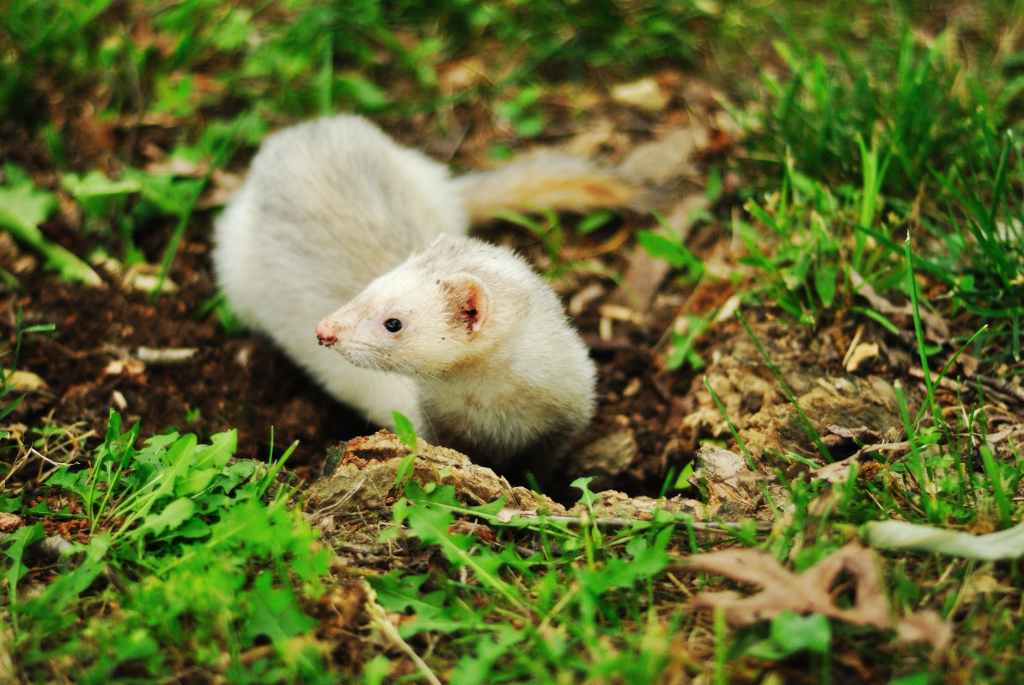
From the folklore of the Micmac and the Passamaquoddy
Now the tale returns to the two little Weasels, or Ermines, or Water-Maids, poor souls, who had such a hard life! And it happened that, fleeing from Master Lox, they came at evening to a deserted village, and entered a wigwam to pass the night. But the elder, being the wiser, and somewhat of a witch in the bud, mistrusted the place, deeming it not so empty as it seemed. And beholding by the door, lying on the ground, the Neckbone of a man or some other animal, she warned her sister that she should in nowise offend it or treat it lightly, to which sent it flying, and by otherwise treating it with scorn and disdain.
Then they laid them down to sleep; but before their slumber came they heard a doleful, bitter voice chanting aloud and shouting, and it was Chamach keg wech, or the Neckbone, bewailing the scorn that had been put upon him, and reviling them with all manner of curses. Then the elder said, “There, truly, I said it. I knew you would be our death if you did not mind me:” it being in all cases an esteemed solace for every woman and most men to say, “I told you so!” But the younger, being well-nigh frightened to a corpse, in a soft whisper implored the elder to let her hide herself in her roll of hair, which the Voice, mocking her, repeated; adding thereto all the reviling and railing that Mitche-hant, the devil, himself ever yet invented, and abusing her so for her past life, and exhorting her so for all the sins, slips, and slops therein (of which there were many), that even the impenitent little Weasel repented and wept bitterly. Howbeit no further harm came to them beyond this, so that the next morning they went their way in peace; and I warrant you Master Neckbone got no kicks that day from them, departing.
Then, coming to a river, they saw on the other side a handsome young man holding a bow, and to him they called, making their usual offer to become his wives, and all for no greater thing than to carry them over the ferry. And this man’s name was See-witch (sea-duck), and to please them he did indeed pass them over in his canoe; but as for taking them home, he said that he had housekeepers in store, and as many as he needed just then, and that of a kind who kept him very busy. So they went their way onwards.
And coming anon to the great sea, they beheld yet another canoe with two men therein, and these were Kwe-moo, the Loon, and Mahgwis, the Scapegrace. And embarking with them, Loon soon began to admire the girls greatly. And saying many sweet things, he told them that he dwelt in the Wigem territory, or in the land of the Owealkesk, of which he himself was one. But the Mahgwis whispered to them aside that they should put little trust in what he told them, for Loon was a great liar. Now when they came to the land of the Owealkesk, they were amazed at the beauty of the people, and saw that all in that land was lovely, nor did they themselves seem less marvelously fair to the men therein. Indeed, the poor little Weasels began to see the end of their sorrows, for, being water-fairies, these sea-birds were nigh akin to them. And there was a great feast, a great dance, and great games held in honor of their arrival, and the two finest young Sea-Duck men, utterly unheeding the old Loon, who believed indeed that they were his own wives, carried them off, and nothing loath wedded them.
And it was in this wife. There was a canoe-race and Kwe-moo, being bitterly angry that he was held of so little account in the Sea-Duck land, went forth with the rest, and, paddling far outside, upset his canoe, and making as if he were drowning called to the Weasels to come and save him. But the Sea-Ducks laughed, and said, “Let him alone. Truly he will never drown. We know him.” And the race ended they went ashore in peace.
And that night they danced late, and the Weasels, being better pleased with the two handsome Sea-Ducks than with Loon, forthwith divorced themselves out of hand, and at once married them, going to where their canoe lay, to pass the bridal night. Now Loon had not gone to the dance, but sat at home nursing his vengeance till he was well-nigh mad. And as the Weasels did not return, he went forth and sought them; and this he did so carefully that at last he found all four by the sea, sound asleep. Whereupon he, with his knife, slew the young men, and being in great fear of their friends took his canoe and went down the river to kill a deer. But not daring to return, and being mad for loss of the Weasels, and fearing to fall into the hands of the enemy, he in despair took his knife and killed himself.
Yet the Weasels, who had seen the deed done, did not betray him, for there was at least so much truth left in them. And they lived with the Sea-Ducks, and I doubt me not went on marrying and mischief-making after their wont even unto the end of their days. And their kind are not dead as yet in any land.
Source:
The Algonquin Legends of New England, Charles G. Leland, 1884



 Kotharian Lightning