
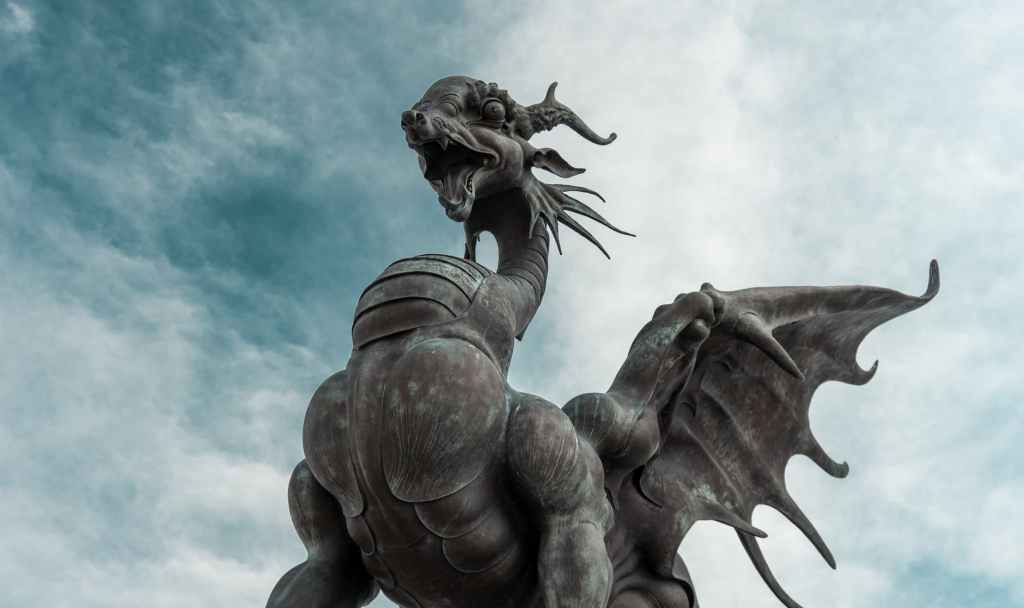
From the folklore of Russia
In a certain Czarstve (kingdom) and in a certain domain, by the sea, by the ocean, on an island, on Buyan, stood a green oak; and under the oak a roasted ox, and in its side a well-sharpened knife. Every time the knife drew itself he pleased to feast. And this story is not a mere fairy story; but who will listen to my story, may he have sables, and mink-fur, and a lovely girl, and a hundred roubles for himself and fifty for his light-o’-love.
There was once a man and woman; and the woman went for water, taking a pitcher; and, having filled it with water, she took it home, and saw, all at once, on the road, a pea rolling about. She thought to herself: “Lo, a veritable godsend!” picked it up and ate it. From this pea quickly developed within her a little boy, and in due time was born into the world; and grew not by years, but by hours, like peasemeal dough in the leavening bowl. And she tended him and fondled him as her best treasure, and sent him to school – a school for three or four years – and he learnt everything in a single year, and he had never a book to learn from.
He came home from the school to his father and mother. “There, my dear little father and mother, a long farewell to my instructors, for I have gone to school enough. I, by God’s goodness, know more and better than they do.” Then he went into the street to amuse himself and collected pins, and brought them to his father and mother.
To his father he said, “Look, here is iron for you. Take it to the blacksmith and have a seven-pound ball made for me.”
His father made no verbal reply, but only reflected in his mind: “God has given me not at all the sort of boy I wanted. I deemed him of mediocre intelligence, and he begins to make a fool of me already. How can one have a sevenpound ball made out of a few pins?” The father, having a good round sum in gold, silver and notes, trudged off to the town, bought seven pounds of iron, and took it to the blacksmith’s forge to cast. They made him a seven-pound ball, and he brought it home.
Pakatsegaroshak came out of the back yard, carrying his seven-pound ball, and heard a storm in the sky, and threw the ball beyond the clouds. Then he returned to the back yard. “Mother, behold me! Look at my head, before I go away. A nasty fly is biting me, for I am a young hero.” Having risen from his mother’s knee, he went out into the courtyard and saw a rain-cloud in the sky. He fell on the damp earth with his right ear to it; and having risen, called to his father: “Oh! Papa, come here!” Listen how it roars and rumbles. My ball is falling to the earth again.” He put out his knee to catch the ball: the ball struck his knee and split in two. He turned angrily on his father: “Father, why didn’t you have the ball made of the iron pins I gave you? If you had done so, it would not have broken in the mere falling. Look! Here is the same iron; go and have it made up; do not add yours.”
The smith forged the iron in the fire, and began to beat it with hammers and draw it out, and made a seven-pound ball of it. There was enough and to spare.
Pakatsegaroshak took his seven-pound ball and went off on his travels along the bare high-road. On and on he trudged. And then Verneegar met him.
“Good morrow, brother Pakatsegaroshak; whither away by road and lane?”
And Pakatsegaroshak replied: “Who are you, pray?”
He answered: “I am the strong and mighty hero Verneegar.”
“Will you be my mate?” says Pakatsegaroshak.
And he: “Oh! Rather, and serve you well, too.”
And they trudged on together, on and on until the strong and mighty hero Verindoob met them.
“Good morrow, brothers!”
“Good day!”
“What sort of fellows are you?” enquired Verindoob.
“No other than Pakatsegaroshak and Verneegar.”
“Where are you off to?”
“We are off to such and such a town. A dragon there devours the people; we are going to kill it.”
“Would it be impossible for me to associate myself with you?”
“Oh! Come on,” says Pakatsegaroshak.
So they reached the town and presented themselves to the king.
“What sort of fellows are you?”
“We are strong and mighty heroes.”
“Could you, perhaps, protect this city? A horrid dragon has enticed and destroyed many of our people; it is high time we had it killed.”
“What right have we to call ourselves strong and mighty heroes, if we cannot do its business for it?”
At midnight they went under a bridge of brushwood to a fiery river. Then a six-headed dragon appeared on the bridge; a horse neighed; a falcon shrieked; a dog howled.
The dragon, facing the horse: “You, you rascal, don’t neigh; and you, falcon, don’t shriek; and you, dog, don’t howl! For lo! There is Pakatsegaroshak! Shall we fight or shall we arrange hings peaceably?”
Says Pakatsegaroshak: “Noble young fellows like us haven’t come all the way to patch up a peace, but to have a jolly good fight. Come on!”
And they began to whack all round. Pakatsegaroshak and his comrades cut off three of the dragon’s heads.
The dragon, perceiving that his days were numbered, observed: “Well! Brothers, if only Pakatsegaroshak would leave me alone, I would soon settle your business for you.”
And so they continued to fight; struck off the last head, and put the horse in the stable, and talcon in its cage, and the hound in its kennel. But Pakatsegaroshak cut the tongues out of the six heads and put them in his wallet. They then rolled the trunk into the fiery river. And so they went to the king; and Pakatsegaroshak presented the six tongues as proof positive.
The king thanked them: “I see that you are all you professed to be, and you have preserved our whole state. Therefore, that you may eat and drink to your heart’s content, take all the best cock-tails and tit-bits without paying for ‘em and scot free.”
And for sheer joy he had it proclaimed all through the town that all the bars, pot-houses, and hotels were to keep open house for the strong and mighty heroes. And so they went everywhere; and didn’t they just swill and guzzle, and play all sorts of high jinks!
Night came and off they went again under the brushwood bridge to the fiery river; and all at once out hopped a seven-headed dragon. At the same time, the horse whinnied; the falcon screamed; and the dog howled.
The dragon faced the horse and said: “Don’t neigh, you nasty thing; and you, falcon, don’t scream; and you, dog, don’t howl! For lo! There is Pakatsegaroshak! Well,” he adds, “Out with you, Pakatsegaroshak; shall we fight or shall we make it up?” “Fine young fellows like us didn’t come out to make peace, but to have a good fight. Come on!”
And they began to whack and spar, and the heroes soon had six of the dragon’s heads off. The seventh was still left.
The dragon says, “Just let me recover my breath.”
But Pakatsegaroshak exclaims, “I’ll recover your breath for you, you just see!”
So the fight began again; and he cut off the last head, cut out the seven tongues, and put them in his wallet; and they flung the trunk into the fiery river. And so they went back to the king and presented the tongues as proof positive.
The third time they went at midnight to the brushwood bridge and the fiery river. All at once a nine-headed dragon appeared. At the same instant the horse neighed; the falcon screamed; and the dog howled.
The dragon faced the horse. “Don’t neigh, you nasty thing; and you, falcon, don’t scream; and you, dog, don’t howl. For lo! Here is Pakatsegaroshak! Well,” he says, “come forth, Pakatsegaroshak, and say, shall we fight or shall we make up?”
Pakatsegaroshak replies, “As though fine fellows like us came to make peace! No; fight’s the word.”
And so they set to, and the heroes cut off eight heads; the ninth remained.
Pakatsegaroshak says, “Let me take breath, impure power!”
He replies: “Take breath or not take breath, you won’t come over me! My brothers you vanquished not by force, but by craft.”
Pakatsegaroshak was not much alarmed, but it set him wondering how the dragon meant to gammon him this time. All at once an idea struck him, and he exclaimed, “Yes, there are your two precious brothers, come to back you up; but I’ll polish ‘em off yet!”
The dragon hastily turned round to look, and Pakatsegaroshak cut off the ninth head, cut out the tongues, put them in his wallet, while the others flung the trunk into the fiery river. And so they went back to the king.
The king said, “I thank you, strong and mighty heroes; live happy and fearless under the divine protection, and take as much money in gold, silver and bank-notes as you require.”
After this all the three dragons’ wives met in a certain place and took counsel together.
“Whence came they who slew our husbands? Nay, we are no women if we do not clear them out of the world.”
The youngest says, “Look here, sisters mine; we will go out on the high-road, where they are sure to pass. I will take the form of a charming resting-place; and when the three, wearied out, sit down upon me all three will be as dead as door-nails.”
And the second said, “If you fail, I will take the form of an apple-tree by the high-road; and as they pass by under the branches let them gather a store of seductive fruit. But the moment they try a mouthful, they will be all dead men.”
And so the heroes rode, and reached a charming resting-place. Pakatsegaroshak made the sign of the cross on it with his sword, and lo, blood flowed forth! They rode under the apple-tree.
“Brother Pakatsegaroshak, let us have a regular feast at the apple-tree!” say the heroes.
He replies: “If possible, let us eat, brothers; but if not, ride further.”
He brandished his sword in the form of a cross over the apple-tree and blood flowed forth all at once. The third dragoness hurried after them, and gaped with her jaws from earth to heaven. Pakatsegaroshak saw that she would soon overtake them. How to save themselves? He looked round, saw that she was just making for him, and flung the three horses between her lips. The dragoness flew off to the blue sea to drink water, and they went further. She hurried after them; and, seeing that she was close upon him, he fl0ung the three falcons into her mouth. Again the dragoness flew off to the blue sea to drink water, and while she was drinking they went yet further. Pakatsegaroshak looked round, the dragoness had again caught him up, and seeing there was no help for it, he flung the three dogs into her mouth. Again she flew off to the blue sea to drink water, and while she was sating her thirst, they journeyed further. He looked round and saw that she had again caught them up. Pakatsegaroshak took his two comrades and flung them into her mouth. The dragoness flew off to the blue sea to drink water, and he journeyed further. He looked round and saw that she had again caught them up. Pakatsegaroshak took his two comrades and flung them into her mouth. The dragoness flew off to the blue sea to drink water, and he journeyed further.
Again she caught him up; he looked round, saw that she was not far off, and exclaimed, “Lord, preserve me and save my soul!” And he saw before him a blacksmith’s workshop, and slunk off into this smithy.
The blacksmiths said to him: “What, stranger, are you faint-hearted?”
“Most honoured Lord God, preserve me from the power of evil and save my soul.”
They, having entered the smithy, slammed the door close.
Open to me,” says the dragoness.
Then the blacksmiths said to her, “Approach the iron door, and we will put it on your tongue.” She licked the door, and the tongue stuck in the middle. The blacksmiths seized the tongue with three red-hot pincers and said, “Come, stranger, and do what you will with her!”
He came out into the courtyard and began beating her, and beat through the skin to the bones, through the bones to the marrow, and took it and all the trunk and buried them seven fathoms deep.
Source:
Russian and Bulgarian Folk-Lore Stories, A.W. Strickland, 1907



 Kotharian Lightning