
A Tale of the Sky World
From Seneca Folklore
A long time ago human beings lived high up in what is now called heaven. They had a great and illustrious chief.
It so happened that this chief’s daughter was taken very ill with a strange affection. All the people were very anxious as to the outcome of her illness. Every known remedy was tried in an attempt to cure her, but none had any effect.
Near the lodge of this chief stood a great tree, which every year bore corn for food. One of the friends of the chief had a dream, in which he was advised to tell the chief that in order to cure his daughter he must lay her beside this tree, and that he must have the tree dug up. This advice was carried out to the letter. While the people were at work and the young woman lay there, a young man came along. He was very angry and said: “It is not at all right to destroy this tree. Its fruit is all that we have to live on.” With this remark he gave the young woman who lay there ill a shove with his foot, causing her to fall into the hole that had been dug.
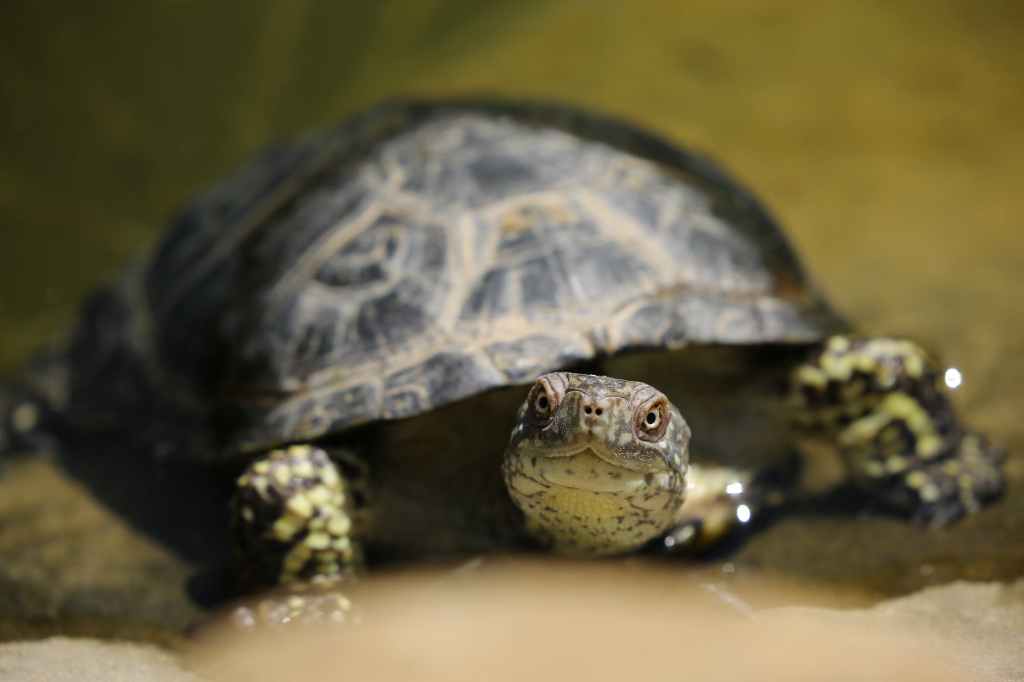
Now, that hole opened into this world, which was then all water, on which floated waterfowl of many kinds. There was no land at that time. It came to pass that as these waterfowl saw this young woman falling they shouted, “Let us receive her,” whereupon they, at least some of them, joined their bodies together, and the young woman fell on this platform of bodies. When these were wearied they asked, “Who will volunteer to care for this woman?” The great Turtle then took her, and when he got tired of holding her, he in turn asked who would take his place. At last the question arose as to what they should do to provide her with a permanent resting place in this world. Finally it was decided to prepare the earth, on which she would live in the future. To do this it was determined that soil from the bottom of the primal sea should be brought up and placed on the broad, firm carapace of the Turtle, where it would increase in size to such an extent that it would accommodate all the creatures that should be produced thereafter. After much discussion the toad was finally persuaded to dive to the bottom of the waters in search of soil. Bravely making the attempt, he succeeded in bringing up soil from the depths of the sea. This was carefully spread over the carapace of the Turtle, and at once both began to grow in size and depth.
After the young woman recovered from the illness from which she suffered when she was cast down from the upper world, she build herself a shelter, in which she lived quite contentedly. In the course of time she brought forth a girl baby, who grew rapidly in size and intelligence.
When the daughter had grown to young womanhood, the mother and she were accustomed to go out to dig wild potatoes. Her mother had said to her that in doing this she must face the west at all times. Before long the young daughter gave signs that she was about to become a mother. Her mother reproved her, saying that she had violated the injunction not to face the east, as her condition showed that she had faced the wrong way while digging potatoes. It is said that the breath of the West Wind had entered her person, causing conception. When the days of her delivery were at hand, she overheard twins within her body in a hot debate as to which should be born first and as to the proper place of exit, one declaring that he was going to emerge through the armpit of his mother, the other saying that he would emerge in the natural way. The first one born, who was of a reddish color, was called Othagwenda; that is, Flint. The other, who was light in color, was called Djuskaha; that is, the Little Sprout.*
[Editor’s note: It should be remembered that most Amerindian gods are given symbolic colors as a part of their appearance with black, blue, red, white, and yellow being the most common.]
The grandmother of the twins liked Djuskaha and hated the other; so they cast Othagwenda into a hollow tree some distance from the lodge.
The boy that remained in the lodge grew very rapidly, and soon was able to make himself bows and arrows and to go out to hunt in the vicinity. Finally, for several days he returned home without his bow and arrows. At last he was asked why he had to have a new bow and arrows every morning. He replied that there was a young boy in a hollow tree in the neighborhood who used them. The grand-mother inquired where the tree stood, and he told her; whereupon then they went there and brought the other boy home again.
When the boys had grown to man’s estate, they decided that it was necessary for them to increase the size of their island, so they agreed to start out together, afterward separating to create forests and lakes and other things. They parted as agreed, Othagwenda going westward and Djuskaha eastward. In the course of time, on returning, they met in their shelter or lodge at night, then agreeing to go the next day to see what each had made. First they went west to see what Othagwenda had made. It was found that he had made the country all rocks and full of ledges, and also a mosquito which was very large. Djuskaha asked the mosquito to run, in order that he might see whether the insect could fight. The mosquito ran, and sticking his bill through a sapling, thereby made it fall, at which Djuskaha said, “That will not be right, for you would kill the people who are about to come.” So, seizing him, he rubbed him down in his hands, causing him to become very small; then he blew on the mosquito, whereupon he flew away. He also modified some of the other animals which his brother had made.
After returning to their lodge, they agreed to go the next day to see what Djuskaha had fashioned. On visiting the east the next day, they found that Djuskaha had made a large number of animals which were so fat that they could hardly move; that he had made the sugar-maple tree to drop syrup; that he had made the sycamore tree to bear fine fruit; that the rivers were so formed that half the water flowed upstream and the other half downstream. Then the reddish-colored brother, Othagwenda, was greatly displeased with what his brother had made, saying that the people who were about to come would live too easily and be too happy. So he shook violently the various animals – the bears, deer, and turkeys – causing them to become small at once, a characteristic which attached itself to their descendants. He also caused the sugar maple to drop sweetened water only, and the fruit of the sycamore to become small and useless; and lastly he caused the water of the rivers to flow in only one direction, because the original plan would make it too easy for the human beings who were about to come to navigate the streams.
The inspection of each other’s work resulted in a deadly disagreement between the brothers, who finally came to grips and blows, and Othagwenda was killed in the fierce struggle.
The Onondaga Creation Myth
From Onondaga Folklore
Among the ancients there were two worlds in existence. The lower world was in a great darkness, the possession of the great monster; but the upper world was inhabited by mankind; and there was a woman conceived and would have the twin born. When her travail drew near, and her situation seemed to produce a great distress on her mind, and she was induced by some of her relatives to lay herself on a mattress which was prepared, so as to gain refreshments to her wearied body; but while she was asleep the very place sunk down towards the dark world. The monsters of the great water were alarmed at her appearance of descending to the lower world; in consequence, all the species of the creatures were immediately collected into where it was expected she would fall. When the monsters were assembled, and they made consultation, one of them was appointed in haste to search the great deep, in order to procure some earth, if it could be obtained; accordingly the monster descends, which succeeds, and returns to the place.
Another requisition was presented, who would be capable to secure the woman from the terrors of the great water, but none was able to comply except a large turtle that came forward and made proposal to them to endure her lasting weight, which was accepted. The woman was yet descending from a great distance. The turtle executes upon the spot, and a small quantity of earth was varnished on the back of the turtle. The woman alights on the seat prepared, and she receives a satisfaction. While holding her, the turtle increased every moment, and became a considerable island of earth, and apparently covered with small bushes. The woman remained in a state of unlimited darkness, and she was overtaken by her travail to which she was subject. While she was in the limits of distress one of the infants was moved by an evil opinion, and he was determined to pass out under the side of the parent’s arm, and the other infant in vain endeavoured to prevent his design. The woman was in a painful condition during this time of their disputes, and the infants entered the dark world by compulsion, and their parent expired in a few moments. They had the power of sustenance without a nurse, and remained in the dark regions.
After a time the turtle increased to a great Island, and the infants were grown up, and one of them possessed with a gentle disposition and named Enigorio, i.e., the good mind. The other youth possessed an insolence of character, and was named Enigonhahetgea, i.e., the bad mind. The good mind was not contented to remain in a dark situation, and he was anxious to create a great light in the dark world, but the bad mind was desirous that the world should remain in a natural state. The good mind determined to prosecute his designs, and therefore commences the work of creation. At first he took the parent’s head, (the deceased) of which he created an orb, and established it in the center of the firmament, and it became of a very superior nature to bestow light to the new world, (now the sun) and again he took the remnant of the body, and formed another orb, which was inferior to the light, (now the moon). In the orb a cloud of legs appeared to prove it was the body of the good mind, (parent). The former was to give light to the day and the latter to the night; and he also created numerous spots of light, (now stars); these were to regulate the days, nights, seasons, years, etc. Whenever the light extended to the dark world the monsters were displeased and immediately concealed themselves in the dark places, lest they should be discovered by some human beings.
The good mind continued the works of creation, and he formed numerous creeks and rivers on the Great Island, and then created numerous species of animals of the smallest and greatest, to inhabit the forests, and fish of all kinds to inhabit the waters. When he had made the universe he was in doubt respected some being to possess the Great Island; and he formed two images of the dust of the ground in his own likeness, male and female, and by his breathing into their nostrils he gave them the living souls, and named them Ea-gwe-howe, i.e., a real people; and he gave the Great Island, all the animals of game for their maintenance; and he appointed thunder to water the earth by frequent rains, agreeable to the nature of the system; after this the Island became fruitful, and vegetation afforded the animals subsistence.
The bad mind, while his brother was making the universe, went throughout the Island and made numerous high mountains and falls of water, and great steeps, and also creates various reptiles which would be injurious to mankind; but the good mind restored the Island to its former condition. The bad mind proceeded further in his motives, and he made two images of clay in the form of mankind; but while he was giving them existence they became apes, and when he had not the power to create mankind he was envious against his brother; and again he made two of clay. The good mind discovered his brother’s contrivances, and aided in giving them living souls. (It is said these had the most knowledge of good and evil).
The good mind now accomplishes the works of creation, notwithstanding the imaginations of the bad mind were continually evil; and he attempted to enclose all the animals of game in the earth, so as to deprive them from mankind; but the good mind released them from confinement, (the animals were dispersed, and traces of them were made on the rocks near the cave where it was closed). The good mind experiences that his brother was at variance with the works of creation, and feels not disposed to favor any of his proceedings, but gives admonition of his future state. Afterwards the good mind requested his brother to accompany him, as he was proposed to inspect the game, etc., but when a short distance from their nominal residence, the bad mind became so unmanly that he could not conduct his brother any more. The bad mind offered a challenge to his brother and resolved that who gains the victory should govern the universe, and appointed a day to meet the contest. The good mind was willing to submit to the offer, and he enters the reconciliation with his brother; which he falsely mentions that by whipping with flags would destroy his temporal life; and he earnestly solicits his brother also to notice the instrument of death, which he manifestly relates by the use of deer horns, beating his body he would expire. On the day appointed the engagement commenced, which lasted for two days; after pulling up the trees and mountains as the track of a terrible whirlwind, at last the good mind gains the victory by using the horns, as mentioned the instrument of death, which he succeeded in deceiving his brother, and he crushed him in the earth; and the last words uttered from the bad mind were, that he would have equal power over the souls of mankind after death; and he sinks down to eternal doom, and became the Evil Spirit. After this tumult the good mind repaired to the battle ground, and then visited the people and retired from the earth.
There are many variants of this story. Judge Dean’s is one of the best of these. In Van der Donck’s early Mohawk version the woman comes from and returns to heaven, well pleased to have fulfilled her mission of being the universal mother of all men and animals. In Hewitt’s versions the woman who falls is the grandmother of the two boys, the good one being called Odendonnia or Sapling, in the Onondaga tongue, and the other Ohaa or Flint. Usually several animals dive to bring up mud to place on the Turtle. Some die in the attempt. In these recent accounts the animals have a prominent place.
The Abbe Gallinee, who visited the Seneca towns with the great explorer in 1669, had the creation myth from La Salle in quite a different form. After the fall of the woman, “a Spirit descending from the heavens with three arrows, passed two of them over her body. She conceived two male children, one of whom became a great hunter and was greatly beloved of his mother; the other, being unfortunate in the hunt and killing only lean beasts, his mother despised him. This one, afflicted by his misfortune and losing heart, the Spirit, his father, visited and consoled him by promising to hive him fortune in the hunt, and to teach him besides the art of building and agriculture. In fact he showed him the park where the fat beasts, which his brother killed in the hunt, were shut up, and led him under the waters, where he showed him a house built neatly and commodiously. He gave him the seeds of melons, corn, etc. He then built for his mother a house of this model, gave her fruit and very good venison to eat, and began to grow so much in her good graces as to cause his brother to be jealous.
A great serpent having destroyed all the men first made, the son invoked the aid of the Spirit, his father. He gave him the third arrow, and showed him how he must kill the serpent with it, and what he must do with the body. All was done, and men came again. The father at last became a beaver, and for this reason beavers understand building. From him spread the nation of the Iroquois.
The game park, gifts and house appear in some N.Y. stories.
Sources:
Seneca fiction, legends, and myths, F.W. Hodge, 1918
Iroquois Folk Lore, Martin Beauchamp, 1922
For a similar story told in Algonquin lore, see here:



 Kotharian Lightning