
This is the first post in a new common series for the blog. Basically, as I work through certain study materials, I’ll post excerpts that interest me. The book I just finished reading was a study of Siberian tribal beliefs, the native Siberians in question being Turkish, Finnic, Mongolian, and Asiatic Eskimo peoples.
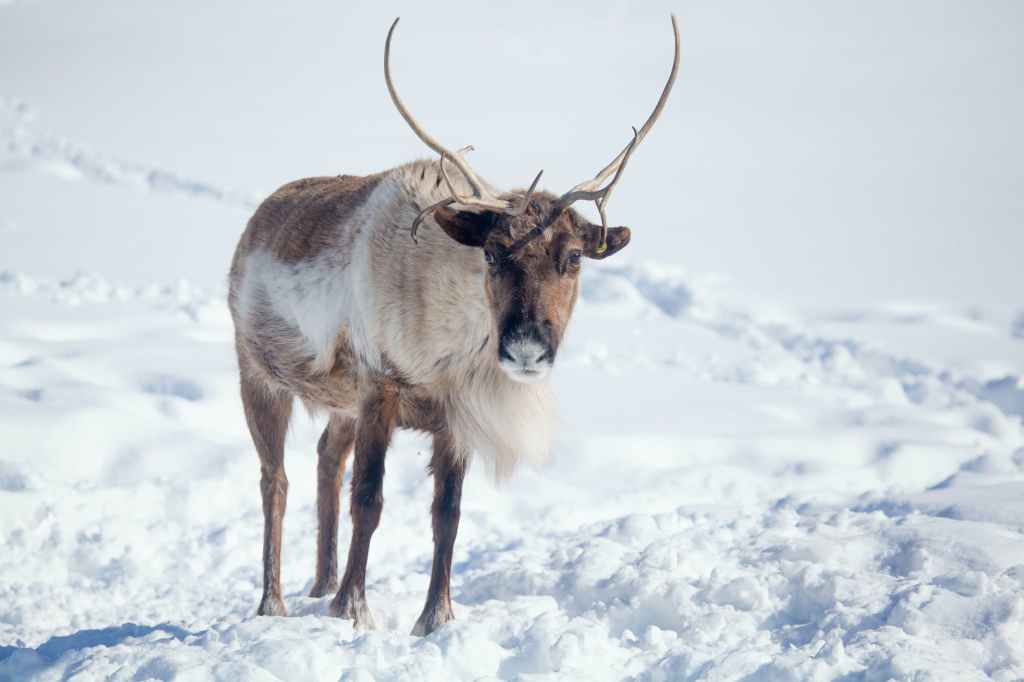
The animals that peoples around the world interact with invariably enter their mythologies. In the case of Siberians, animals such as dogs, reindeer, and bears, amongst others, are extremely important. The tribalistic Finns, in particular, are historically known for their relationship with the reindeer, some peoples even becoming known for the practice of reindeer herding.
Santa Claus is known for riding a sleigh driven by reindeer through the sky, which he uses to deliver gifts to the good people below. It is therefore interesting that Sakhil-Torum, the god of rain amongst the Finnic group known as the Mansi (in this excerpt called by their former name of Voguls) is presented as a god who drives a herd of reindeer across the sky, each of whom has barrels of water strapped to it. As the reindeer sway in their movements, the rain falls upon the earth. His brother tells him where to drive the herd, sending rains to the good people who pray to the gods.
“In his account of the natives of north-western Siberia, the Ugrian Ostyak, Vogul, and Samoyed, Gondatti, in speaking of their religion, pays most attention to the Vogul mythology. He says that the gods of the Vogul are divided into two classes, of good and bad gods. The chief of the beneficent deities is Yanykh-Torum (called also Numi-Torum or Voykan-Torum). The principal evil deity is Khul. Yanykh-Torum is, however, not the highest of the gods; there is another, higher than he, Kors-Torum (The Creator), the progenitor of all the gods. Kors-Torum has never revealed himself to man, and the Vogul say that they cannot picture to themselves what he is like, that whatever they know of him is only known through the lesser gods. He never descends to earth, but sometimes sends thither his eldest son, Yanykh-Torum. Yanykh-Torum has the form of a man, but from the splendour of his raiment he shines like gold. Like his father he never carries any weapon. About once a week he descends to earth to see how men’s affairs are going on. If they pray to him to send rain or fair weather he gives commands to his younger brother, Sakhil-Torum, who dwells in the dark clouds, to do what is required. Sakhil-Torum, like his brother, has the form of a man, and drives reindeer, which have tusks like a mammoth, in the clouds. His reindeer are laden with casks of water. When they are sluggish he whips them up, and as they plunge under his strokes the water in the casks is spilled and falls on the earth as rain.”
Aboriginal Siberia: A Study in Social Anthropology, M.A. Czaplicka, 1914 – Chapter 13



 Kotharian Lightning