
From Zuni Folklore
The Twain Beloved and priest fathers gathered in council for the naming and selection of man-groups and creature-kinds (tanau’e), spaces, and things. Thus determined they that the creatures and things of summer and the southern space pertained to the Southern people, or Children of the Producing Earth-mother;and those of winter and northern space, to the Winter people, or Children of the Forcing or Quickening Sky-father.
Of the Children of Summer, some loved and understood most the Sun, hence became the fathers of the Sun people (Ya’tok’ya-kwe). Some loved more the water, and became the Toad people (Tak’ya-kwe), Turtle people (Etaa-kwe), or rog people (Tak-yaiuna-kwe), who so much love the water. Others, again loved the seeds of earth and became the People of Seed (Taatem’hlauah-kwe), such as those of the First-growing grass (Petaa-kwe, now Aiyaho-kwe), and of the Tobacco (Ana-kwe). Yet still others loved the warmth and became the Fire or Badger people (Tonashi-kwe). According, then, to their natures and inclinations or their gits from below or of the Masters of Life, they chose or were chosen for their totems.
Thus, too, it was with the People of Winter or the North. They chose, or were chosen and named, according to their resemblances or aptitudes; some as the Bear people (Ainshi-kwe), Coyote people (Suski-kwe), or Deer people (Shohoita-kwe); others as the Crane people (Ka’lokta-kwe), Turkey people (Tona-kwe) or Grouse people (Poyi-kwe). In this wise it came to pass that the Ashiwe were divided of old in such wise as are their children today, into anotiwe (clans or kinties) of brothers and sisters who may not marry one another, but from one to another of kin. Yea, and as the Earth-mother had increased and kept within herself all beings, cherishing them apart from their father even after they came forth, so were these our mothers and sisters made the keepers of the kin-names and of the seed thereof, nor may the children of each be cherished by any others of kin.
Now the Beloved Foremost Ones (Uan Ehkon Ateona) of these clans were prepared by the instructions of the gods and the fathers of the house of houses and by being breathed of them (puak’yanapk’ya), whereby they became ashiwani or priests also, but only priests of possession, master keepers of sacred things and mysteries (tikitlapon amosi), each according to the nature of kinship. It was thus that the warmth-wanting (tek’ya’hlna shema) Badger-people were given the great shell (tsulikeinan ‘hlana), the heart or navel of which is potent or sensitive of fire, as of the earthquake and the inner fire is the coiled navel of the Earth-mother. On the sunny sides of hills burrow the badgers, finding and dwelling amongst the dry roots whence is fire. Thus the “Two Badgers” were made keepers of the sacred heart-shell (suti k’ili achi), makers and wardens of fire. So, too, were the Bear, Crane, and Grouse people given the muetone, or the contained seed substance of hail, snow and new soil (for the bear sleeps, no longer guarding when winter comes, and with the returning crane, in the wake of the duck, comes winter in the trail of the white growing grouse). So, to the Toad and other water people, descended to them from Yanauluha the k’yuetone, or the contained seed-substance of water; and to the Ataa-kwe, or All-seed people, especially to the First-growing grass people and the Tobacco people, was given of him also, the chuetone, or the contained seed-substance of corn grains.
Now when the foremost ones of more than one of these kin clans possessed a sacred seed-substance, they banded together, forming a society for the better use and keeping of its medicine and its secret (forbidden) mysteries, and for the guidance and care thereby of their especial children. Thus, leading ones of the Bear people, Crane people, and Grouse people become the “Hleeta-kwe, or Bearers of the Ice-wands as they are sometimes called, whose prayers and powers bring winter, yet ward off its evils to the flesh and fearsomeness to the soul. But at first, only four were the bands of priest-keepers of the mysteries: Shiwana-kwe, or the Priesthood of Priest people; Sania-k’ya-kwe, or the Priesthood of the Hunt, who were of the Coyote, Eagle, and Deer kin, Keepers of the Seed-substance of Game; Achiak’ya-kwe or the Great Knife people, makers and defenders of pathways for the people; and Newe-kwe, keepers of magic medicines and knowledge invincible of poison and other evil, whose first great father was Paiyatuma, God of Dew and the Dawn, himself. Out of these and of other clans were formed in later days by wisdom of the Father of Medicines and Rites (the great Poshaiyank’ya, when he returned, all as is told in other talk of our olden speech) all other societies, both that of the Middle, and the Twain for each of all the other six regions (tem’halatekwiwe,) the Tabooed and Sacred Thirteen. But when all was new, men did not know the meanings of their possessions, or even of the commandments (haitoshnawe); even as children knew not the prayers (teusupenawe). These they must first be taught, that in later days, when there is need therefor, they may know them and not be poor.
As it was with men and creatures, so with the world; it was young and unripe (k’yaiyuna). Unstable its surface was, like that of a marsh; dank, even the high places, like the floor of a cavern, so that seeds dropped on it sprang forth, and even the substance of offal became growing things.
Earthquakes shook the world and rent it. Beings of sorcery, demons and monsters of the under-world fled forth. Creatures turned fierce, becoming beasts of prey, wherefore others turned timid, becoming their quarry; wretchedness and hunger abounded, black magic, war, and contention entered when fear did into the hearts of men and the creatures. Yea, fear was everywhere among them, wherefore, everywhere the people, hugging in dread their precious possessions became wanderers, living on the seeds of grasses, eaters of dead and slain things! Yet still, they were guided by the Two Beloved, ever in the direction of the east, told and taught that they must seek, in the light and under the pathway of the Sun, the middle of the world, over which alone could they find the earth stable, or rest them and bide them in peace.
When the tremblings grew stilled for a time, the people were bidden to gather and pause at the First of Sitting-places, which was named K’eyatiwankwi (Place of upturning or elevation). Yet still poor and defenseless and unskilled were the children of men, still moist and ever-anon unstable the world they abode in. Still also, great demons and monsters of prey fled violently forth in times of earthquake (anu-kwaik’yanak’ya) and menaced all wanderers and timid creatures. Therefore the Beloved Twain took counsel one with the other and with the Sun-father, and instructed by him, the elder said to the younger, “Brother, behold!”
That the earth be made safer for men, and more stable,
Let us shelter the land where our children be resting,
Yea! The depths and the valleys beyond shall be sheltered
By the shade of our cloud-shield! Let us lay to its circle
Our firebolts of thunder, aimed to all the four regions,
Then smite with our arrows of lightning from under.
Lo! the earth shall heave upward and downward with thunder!
Lo! the fire shall belch outward and burn the world over,
And flood of hot water shall seethe swift before it!
Lo! smoke of earth-stenches shall blacken the daylight
And deaden the senses of them else escaping
And lessen the number of fierce preying monsters!
That the earth be made safer for men, and more stable.”
“It were well,” said the younger, ever eager, and forthwith they made ready as they had between themselves devised. Then said the elder to the younger,
“Wilt thou stand to the right, or shall I younger brother?”
“I will stand to the right!” said the younger, and stood there.
To the left stood the elder and when all was ready,
“Hluaa they let fly at the firebolts, their arrows!
Deep bellowed the earth, heaving upward and downward.
“It is done,” said the elder. “It is well,” said the younger.
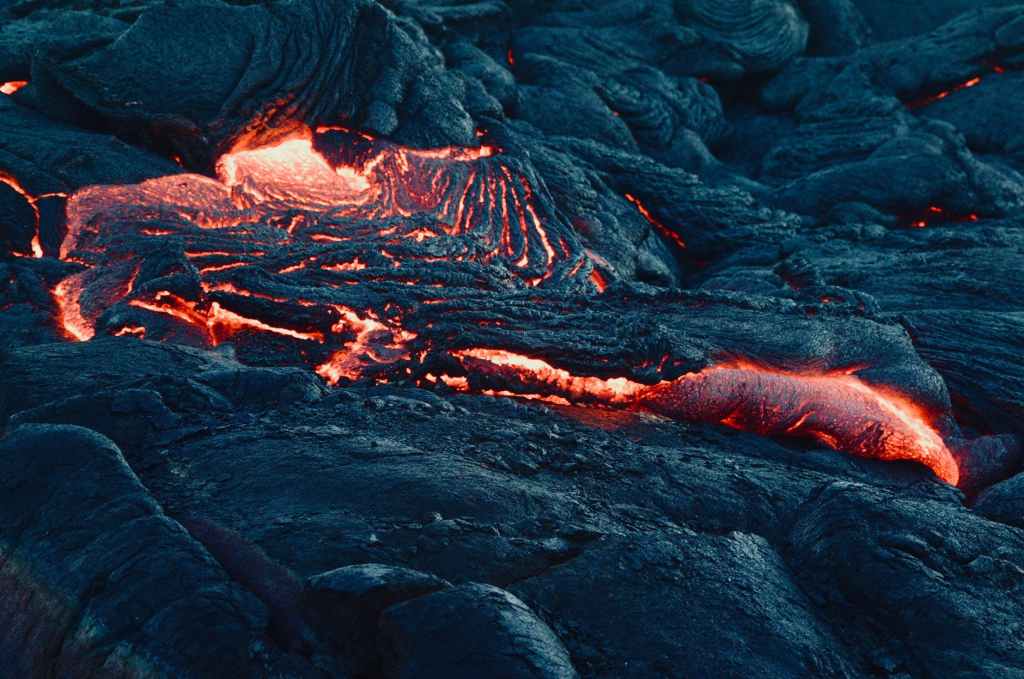
Dread was the din and stir. The heights staggered and the mountains reeled, the plains boomed and crackled under the floods and fires, and the high hollow-places, hugged of men and the creatures, were black and awful, so that these grew craved with panic and strove alike to escape or to hide more deeply. But ere-while they grew deafened and deadened, forgetful and asleep! A tree lighted of lightning burns not long! Presently thick rain fell, quenching the fires; and waters washed the face of the world, cutting deep trails from the heights downward, and scattering abroad the wrecks and corpses of stricken things and beings, or burying them deeply. Lo! They are seen in the mountains to this day; and in the trails of those fierce waters cool rivers now run, and where monsters perished lime of their bones (aluwe – calcarcous nodules in malpais or volcanic tuff) we find, and use in food stuff! Gigantic were they, for their forms little and great were often burned or shriveled and contorted into stone. Seen are these, also, along the depths of the world. Where they huddled together and were blasted thus, their blood gushed forth and flowed deeply, here in rivers, there in floods; but it was charred and blistered and blackened by the fires, into the black rocks of the lower mesas (apkwina, lava or malpais). There were vast plains of dust, ashes and cinders, reddened as is the mud of a hearth-place. There were great banks of clay and soil burned to harness – as clay is when baked in the kiln-mound, blackened, bleached or stained yellow, gray, red, or white, streaked and banded, bended or twisted. Worn and broken by the heavings of the under-world and by the waters and breaths of the ages, they are the mountain-terraces of the Earth-mother, “dividing country from country!” Yet many were the places behind and between these – dark canyons, deep valleys, sunken plains – unharmed by the fires, where they swerved or rolled higher – as, close to the track of a forest-fire, green grow trees and grasses, and even flowers continue to bloom. Therein, and in the land sheltered by the shield, tarried the people, awakened, as from fearful dreams. Dry and more stable was the world now, less fearsome its lone places; since, changed to rock were so many monsters of prey (some shriveled to the size of insects; made precious as amulets for the hunter and warrior, as told in other talks of our ancient speech).
But ever and anon the earth trembled anew in that time, and the people troubled.
“Thus, being, it is not well,” said the Two. “Let us again seek the Middle.” So, they led their myriads far eastward and tarried them at Tesak’ya Yala (Place of nude mountains).
Yet soon again the world rumbled, and again they led the way into a country and place called Tamelan K’yaiyawan (Where tree boles stand in the midst of the waters). There the people abode for long, saying (poor people!) “This is the Middle!” Therefore they built homes. At times they met people who had gone before, thus learning much of ways in war, for in the fierceness that had entered their hearts with fear, they deemed it not well, neither liked they to look upon strangers peacefully. And many strange things also were learned and happened there, that are told in other speeches of the ancient talk.
Source:
Zuni Creation Myths, Frank Hamilton Cushing, 1896



 Kotharian Lightning