
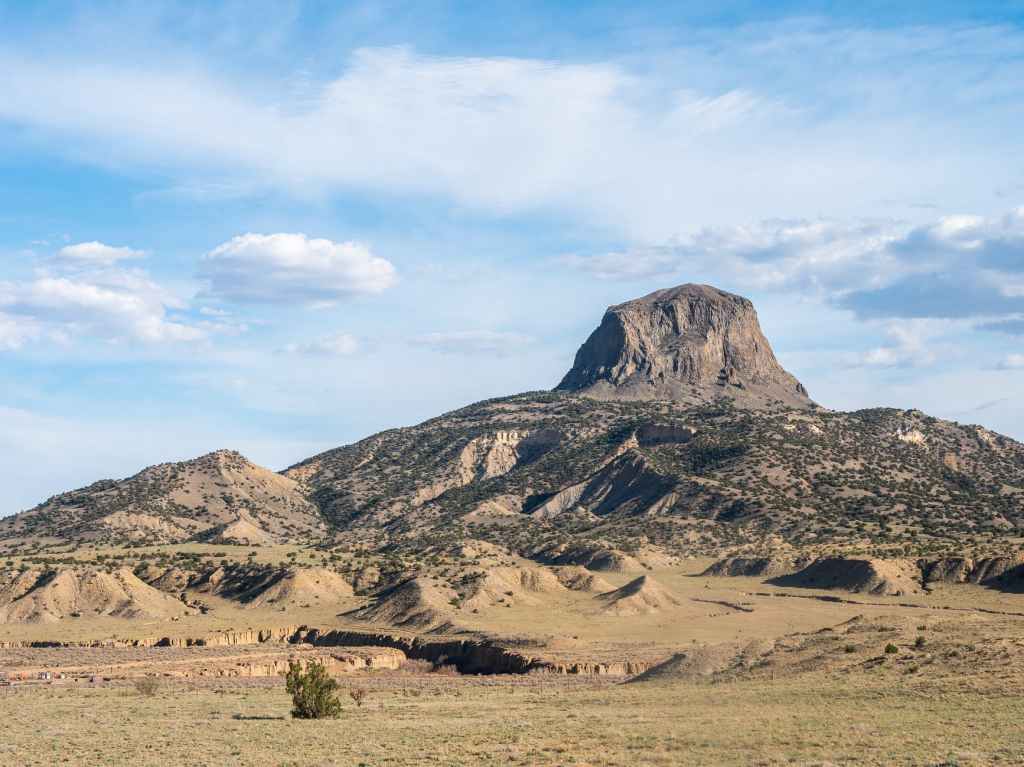
From Zuni Folklore
When the Twain Little Ones, Ahaiyuta and Matsailema, again bade the people arise to seek the Middle, they divided them into great companies, that they might fare the better (being fewer in numbers together) as well as be the better content with thinking that, thus scattered, they would the sooner find the place they had for so long sought. So, again the Winter people were bidden to go northward, that in their strength they might overcome evils and obstacles and with their bows strung with slackless fiber of yucca, contend, winning their way with the enemy in cold weather or warm, and in rain and dryness alike. With them, as aforetime, they carried their precious muetone, and with them journeyed Matsailema and the Warriors of the Knife, they and chosen Priests of the Bow.
Also, to the southward, as before, journeyed the Seed people and the kinties of Corn and others of the Summer people, they and with them the Black people, wise and possessed of the magic of the under-fire, having dealings also with Ka’ka-kwe and with the wonderful Chua-kwe – a people like themselves, of corn, and called therefore People of Corn grains, – they and their Ka’ka, the K’yamak’ya-kwe, or Snail Beings of the South (those who waged war with men ad their Ka’ka in after times), for these reasons they, the Summer people, led the people of Corn and Seed and these alien people.
And as before, the people of the Middle – yea, and those of the Seed and Dew who especially cherished the chuetone and the Maidens of Corn – sought the Middle through the midmost way, led of Ahaiyuta, the elder, and his Priests of the Bow.
The People of Winter, those led by the Hleeto-kwe, and Matsailema, fought their way fiercely into the valley of the Snow-water river (Uk’yawane – Rio Pnerco del Poniente), settling first at the mud-issuing springs of that valley (Hekwainankwin), where their villages may be seen in mounds to this day, and the marks of the rites of their fathers and of their kin-names on the rocks thereabout.
And they become far wanderers toward the north, building towns wheresoever they passed, some high among the cliffs, others in the plains. And how they reached at last the “Sacred City of the Mists Enfolded” (Shipapulima, at the Hot Springs in Colorado), the Middle of the world of Sacred Brotherhoods (Tik’yaawa Itiwana), and were raught of Poshaiank’ya ere he descended again; and how they returned also, thus building everywhere they tarried, along the River of Great Water-flowing, (Rio Grande del Norte) even back to the mountains of Zuuiland (Shiwina yalawan) and settled finally at the Place of Planting (Ta’iya or Las Nutrias) – all this and more is told in the speeches they themselves hold of our ancient discourse.
The people of Corn and Seeds, guided by the Kwinikwakwe, fared for long peacefully, southward along the valley of the River of Red Flowing Waters, building them towns of beauty and greatness, as may be seen to this day, and the marks of their rites also are on the rocks whithersoever they traveled. Far south they fared until they came to the great valley of Shohkoniman (home, or place of nativity, of the Flute-canes) beneath the Mountain of Flutes (Shohko yalana – La Sierra Escudilla), whence they turned them eastward.
How they builded thereafter, wheresoever long their remained, not single towns, but for each sept of their kinties a town by itself, and the names of these clan-towns, and the wars they fought contending with the Ka’ka, and how finally they reached the Moutnain of Space-speaking Markings (Yala Tetsinapa), then turned them back westward and sat them down at last with other people of the way, in the upper valley of Zuniland (Shiwina Ten’hlkwaina), building Hesho-tatsina (The Town of Speech0markings) and many other towns, all of them round and divided into parts, ere they rejoined the people of the Middle, when that they too had come nigh over the heart of the world – all this and much else is told in the speeches they themselves hold of our ancient discourse.
How the People of the Middle, the Macaw people and their children, journeyed straightway eastward, led by Ahaiyuta and the fathers of all the people, this we tell in the mid-coming speech of our sacred ancient discourse, and in other speeches thereof. How, now, after time, they settled at Kwakina, where the Brotherhood of Fire (Makekwe) had its place of ancient origin in wondrous wise – told of by themselves – and where originated their great dance drama of the Mountain Sheep, and the power of entrance into fire, and even of contention with sorcery itself.
And at each place in which the people stopped, building greatly, they learned or did some of the things for which those who be custodians of our olden customs amongst the Tik’yaapapakwe (Sacred Brotherhoods) are still marvelous in their knowledge and practice. But after our father ancients had builded in Kwakina, lo! When the world rumbled and the shells sounded, the noise thereof was not great, and therefore no longer did they arise as a whole people, for seeking yet still the Middle, but always many abode longer, some living through the dangers which followed, and becoming the father of “Those who dwell round about the Middle.” Still, for long the warnings sounded and the leaders would be summoning the people to seek the “very mid-most place wherein the tabernacle of the sacred seed-contents might be placed at rest safely for all time, and where might dwell in peace those who kept it.”
It was in this way that first after Kwakina, Hawikuh was built, and thereafter, round about Zuni, each of all the others of the six towns of all the regions the Midmost (Shiwina ‘Hluella Ulapna).
First, then, Kwakina, then Hawikuh, K’yanawe, Hampasawan, K’yakime and Matsaki. And in what manner the people dwelt in each of these, how they talked and consorted wondrously with beasts and gods like is told in the telapnawe (tales of the olden time passing) of our ancients, alike in the “lies of the grandfathers” (i.e. Fairy tales or similar fictional stories) and in the “strands” of their solemn sayings. But always, at each place, were those abiding who believed, despite the warnings, that they had found the Middle, least wise for themselves, contending the which, they continued in the place of their choice, those of the Northern (sept) in the first place, those of the West next, and so, those of the South, East, Upper and Lower regions. Whilst still the main people of the Macaw and the other Middle minties, sought unweariedly until they thought at last that in Matsaki they had found indeed the place of the Middle.
Whilst in this persuasion they still tarried there, lo! Again, after long wanderings through many valleys, the peoples of Corn and the Seed found them there, through seeing of their smoke, and in the near valley to the eastward found they as well the peoples of the Corn and the Seed, dwelling in their great round towns, the smoke whereof wanderers had also erstwhile been. So they said to them, “Ye are our younger brothers! At Matsaki, here at the Middle, let us dwell in peace as one people, others of our kinds around about us, yet with us!”
Thereby Matsaki greatly increased; but the warnings yet still sounded anon and the gods and master-priests of the people could not rest.
Nay, they called a great council of men and the beings, beasts, birds and insects of all kinds ‘hlimna; these were gathered in the council.
After long deliberation it was said:
“Where is K’yanas’tipe, the Water-skate? Lo! Legs has he of great extension, six in number. Mayhap he can feel forth with them to the uttermost of all the six regions, thereby pointing out the very Middle.” And K’yanas’tipe, being summoned, appeared in semblance, growing greater; for lo! It was the Sun-father himself (K’yanas’tipe through ‘hlimna being). And he answered their questions ere he was bespoken, saying, “Yea, that can I do.” And he lifted himself to the zenith, and extruded his finger-feet six to all of the six-regions, so that they touched to the north, the great waters; and to the west, and the south, and the east, the great waters; and to the northeast, the waters above; and to the southwest, the waters below.
But to the north, his finger-foot grew cold, so he drew it in; and to the west, the waters being nearer, touched his finger-foot thither extended, so he drew that in also. But to the south and east far reached his other finger-feet. Then gradually he settled downward and called out, “Where my heart and navel rest, beneath them mark ye the spot and there build ye a town of the midmost, for there shall be the midmost place of the earth-mother, even the navel; albeit not the center, because of the nearness of cold in the north and the nearness of waters in the west.” And when he descended (squatting), his belly rested over the middle of the plain and valley of Zuni; and when he drew in his finger-legs, lo! There were the trail-roads leading out and in like stays of a spider’s net, into and forth from the place he had covered.
Then the fathers of the people built in that spot, and rested thereat their tabernacle of sacred treasures. But K’yanas’tipe had swerved in lowering, and their town was reared a little south of the very midmost place. Nevertheless, no longer in after time sounded the warnings. Hence, because of their great good fortune (halowilin) in thus finding the stable middle of the world, the priest-fathers of the people called this midmost town the Abiding Place of Happy Fortune (Halonawan).
Yet, because they had erred even so little, and because the first priest of after times did evil, lo! The river to the southward ran full, and breaking from its pathway cut in twain the great town, burying houses and men in the mud of its impetuosity. Whence, those who perished not and those of the flooded towns rounded about fled to the top of the Mountain of Thunder, they with all their Seed people and things, whence the villagers they built there were named Taaiya’hltona Hluelawa, or the “Towns-all-above-of-the-seed-all.”
But when by the sacrifice of the youth priest and maiden priestess (as told in other speech) the waters had been made to abate and the land became good to walk upon, all the people descended, calling that high mountain place, which ever after hath echoed thunder, Taaiyalane, or the Mountain of Thunder. When all the towns were rebuilded, then on the northern side of the river they builded anew the Town of the Middle, calling it Halona Itiwana (Halona the Midmost); but the desolated part they called Halonawan, because they had erred there (halowak’ya), though even so litt.e
Now at last never more did the world rumble; yet the fathers of the people questioned in their hearts, fearing further misfortune to their children, if so be they still erred in the resting place of the sacred mysteries whatsoever. So, when the sun had reached the middle between winter and summer, they devised an ordinance and custom whereby this might be tested. They brought out the things of lightning and the earthquake; even the keepers of the great navel-shell were summoned as having canny and magic skill. And as now we do in observing the custom of the Middle-arriving, all the people fasting, all the first close kept, so then, for ten days they made ready, and on the last night the shell was laid by the sacred fire in Hein Hiwitsina of the North, and watched all the night through, by its keepers and the fathers foremost, and the Priests of the Bow. Meanwhile the incantations of dread meaning, taught of the Twain in Hanthlipink’ya, were chanted, yet the world only rumbled deeply and afar down, but it trembled not, neither did the Seven Fell Ones breathe destruction – only storms. Then, said the fathers, “O, thanks! In peace-expecting mood may we kindle afresh the fires of our hearths for the year that is dawning.” And they sent forth new fire to all houses, causing the old to be cast out as is seen and known to us all in the custom of this day of the Middle-arriving!
So, happily abode the people, they and their brothers round about them at the Middle, for surely now the sacred things were resting over the stable middle of the world, and were the foundations of Halona Itiwana or the Midmost place of Favor.
Source:
Zuni Creation Myths, Frank Hamilton Cushing, 1896



 Kotharian Lightning