
The Allegory of the Cave in Brief
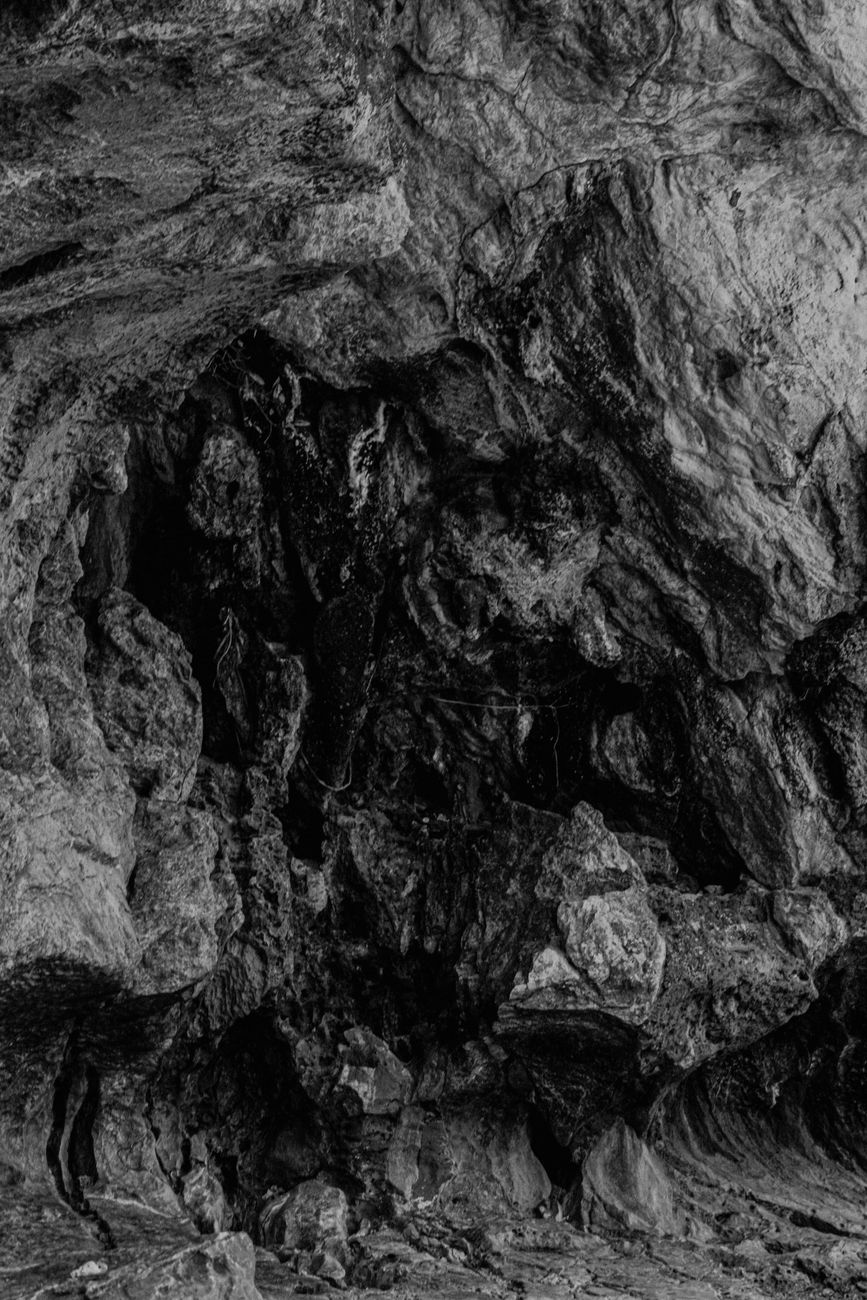
The Allegory of the Cave appears in Book 7 of Plato’s Republic. The idea is that a group of men have been raised in a cave all their lives, chained and staring at a wall. Behind them their captors have been putting on a show, standing in front of a large fire with various wooden cutouts resembling animals and people, casting shadows upon the wall. With these shadows they have acted out entire representations of life. Thus, the entire lives of these captives have been nothing but sitting in a cave and watching shadows upon the wall. Plato argues that these captives would then regard reality as being nothing but the shadows and their movements.
He then asks what would happen if someone came along and freed the captives. Most of the captives would continue to stare at the wall, watching it, since that is their full reality. He then asks what would happen if someone came to a captive and told him that his reality was a lie and that he should turn around to see it. If a captive turned around, he would immediately be pained by the sight of the fire which would cause physical distress and make his eyes less clear. However, he would see the reality of their situation, that the shadows were unreal in and of themselves.
Plato then says that if the captive proceeded further, walking out of the cave into the rays of the sun, this too would cause him great pain. However, it would allow him to see the world outside. When outside, he will be able to place himself in the context of reality and then contemplate himself and his existence.
Now emboldened and understanding his place, the captive would return to the cave and endeavor to convince the other captives of their actual situation. Meanwhile, the captives who observed the shadows had previously had a hierarchy based upon who was quickest to observe the shadows, granting honors to these above all others. However, to these captives, the former captive who left and whose eyes were now weaker to perceive the shadows would be regarded as worse than they at perceiving, perhaps even becoming a thing of mockery to the other captives. He then argues that the entire perspective of the former captive would be so anathema to the captives, so upending to their world, that should he try to lead anyone out of the cave, they would order him to be put to death.
The allegory then concludes as follows:
“This entire allegory, I said, you may now append, dear Glaucon, to the previous argument; the prison-house is the world of sight, the light of the fire is the sun, and you will not misapprehend me if you interpret the journey upwards to be the ascent of the soul into the intellectual world according to my poor belief, which, at your desire, I have expressed whether rightly or wrongly God knows. But, whether true or false, my opinion is that in the world of knowledge the idea of good appears last of all, and is seen only with an effort; and, when seen, is also inferred to be the universal author of all things beautiful and right, parent of light and of the lord of light in this visible world, and the immediate source of reason and truth in the intellectual; and that this is the power upon which he who would act rationally, either in public or private life must have his eye fixed.”
Plato – Republic, Book 7
Use in Philosophy
The Allegory of the Cave remains one of the best known philosophical allegories even thousands of years after it was written. To many the former captive best represents the ideal philosopher, one who manages to break free from the various shackles and illusions of life and human society. I’m going to state a different theory here, however. I strongly hold that the Allegory of the Cave is actually the way those most responsible for creating worlds of illusion and control conceive of themselves.
The Context
Everyone is familiar with Plato’s teacher, the famed Socrates. Socrates is best known for his conflicts with the Athenian authorities who regarded Socratic teachings as corrupting to the youths Socrates associated with. Socrates’ teachings eventually led to his trial where he was ordered to recant by the Athenian authorities. Instead, Socrates chose to consume poison.
Plato was Socrates’ most famous student and his presentation of Socrates is as the suffering philosopher who was persecuted for his ideas, despite being entirely in the right. One of the impacts this had upon Plato was the conviction that civic society had to be run according to what he viewed as correct philosophical ideas, a conviction that would eventually lead him to join a conspiracy against Dionysius II, the Tyrant of Syracuse, led by Dion (Greek Kings used to be called Tyrants, which is where the slang use of Tyrant came from, though the title itself wasn’t originally negative). It remains debated by historians whether Plato was part of an attempted violent revolution or a pacifistic attempt to convert civic elites to his philosophy and thus overthrow Dionysius without bloodshed. In either case, though Dion was exiled, he eventually returned with an army and overthrew Dionysius II successfully. Dion was influenced by Plato and some of Plato’s students fought alongside Dion, though Plato himself did not engage in the conflict himself.
It is important thus to consider the book in which the Allegory of the Cave occurs, Plato’s Republic, his most famous treatise on politics. Plato’s Republic is a guide on how to create an oligarchic state ruled over by Philosopher Kings and their associated caste of Guardians who are said to wisely lead over the masses of humanity. It explicitly argues for using authoritarian means of control against groups that Plato holds are morally corrupting like artists and poets. Republic is a very long work and has elements both of politics and philosophy. It’s just important to know here that Republic is an argument for an oligarchic system of government that is based upon philosophical alignment This is contrasted against Athenian democracy, the collective will of a people, and monarchical Tyranny, the rule of an elite lineage. Keep that in mind, the point of the work is to advocate the superiority of an oligarchic collective whose validity is drawn from correct interpretation of reality (according to them).
The Critique
An oligarchic collective whose validity is drawn from correct interpretation of reality… Let me ask you this, dear reader. Doesn’t that describe almost every single religious sect and political force out there? The core contention of the largest religions in the world, Christianity and Islam, has been that their validity comes from having insight into true reality, the creator behind the veil, the more true world that stands apart from the world perceived. Similarly, you have ideologies like Communism who hold that they have the philosophical key to understanding history and how it can unfold, placing their ideas above ideology to the level of certainty, according to them. Conspiracism, or the ideology of conspiracy theories so prominent on the internet, holds that the world is controlled by secrets (the shadows on the wall presented for the masses) and that you become a sort of philosophical elite by understanding who casts these shadows and rejecting them.
We can even apply this to more mainstream ideas, such as the wide variety of internet celebrities known as influencers, who persuade their viewers that they form some sort of knowing philosophical elite by holding to specific ideas, this philosophical-ideological allegiance of course making them greatly superior to normal people. Cults are full of this same mindset, claiming to offer insights on reality that will elevate their members beyond the status of regular humans, the masses. There’s even a popular name that certain parts of the internet call normal people in society, normies. Interesting. What do you think the actual contribution to society from your average internet user who rants about normies amounts to?
For all of these groups, true reality isn’t actually reality as it exists around us. Instead, reality is found either in another world, a supernatural super-reality, according to religion, or in a philosophical abstract conception of the world and its proper order, as in similar secular philosophies. You’ll note that even when these viewpoints are severely challenged or completely fall apart, the go-to defenses aren’t based in rational analysis, but end up as emotive-fanatical training. Specifically, these adherents persuade their followers to have heavily emotive reactions to specific combinations of words, or perhaps visceral reactions to certain symbols, which bypass reason and instead result in the emotions of hatred and rejection. Thus, you have the elites which are somewhat controlled by the same methods, but not entirely, attempting to create the very mass-humanity idea that they hold contempt over by turning their followers into emotive fanatics. Then when the rule of oligarchy is challenged, they point to these sort of mass-humans they have created as being unfit to rule and make decisions, thus continuing to justify oligarchic control.
This is how every one of these various sects which proclaim access to true reality have acted throughout the ages. If one goes against their program, they justify persecution on the basis that super-reality or the correction interpretation of history is being denied. And the justification for this is that they understand true reality. In societies that they run, they often times try to force a recantment, based upon the idea that they are just trying to help the blind man see the truth. Even persecution is justified on the basis that they are trying to prevent other from being deceived and led astray.
What all of these ideas have in common is that they appeal to a very specific flaw of civilized humans which is the desire to be perceived, perhaps just by the self, than those around you. This self-elite perception is almost never backed up by actual outsized contributions to society, such as scientific discoveries or large labor contributions. Instead, the justification for the self-elite perception is that one knows better than those around you, and thus can look down upon them.
Let’s go back to Plato’s text and see how what is really meant:
“The prison-house is the world of sight, the light of the fire is the sun, and you will not misapprehend me if you interpret the journey upwards to be the ascent of the soul into the intellectual world according to my poor belief.”
Plato – Republic, Book 7
The cave is the world, the sun is the mechanism by which manipulators cast shadows, and the only way to escape is into the intellectual world (world of forms) which is the way one leaves the cave. This marks the point in philosophy where reality, which is already revealed, is made subject in organization to a philosophical unseen world. This isn’t a new critique, by the way. Nietzsche and Heidegger both had similar criticisms of the Allegory of the Cave. Heidegger in particular viewed it as the point in which Western Philosophy moved from studying an unconcealed reality to becoming obsessed with correct interpretations. Christianity would soon follow with the idea of the Logos, the word, the idea that reality is created only through abstract ideas rather than abstract ideas being an interpretation of existing reality.
The core idea and the actions that flow from a philosophical narrative are often not revealed until people actually try to put them into effect. Seeing how these ideas have been put in place by philosophically-justified oligarchies, knowing that text they appeared in advocates for philosophical oligarchy, all leads to the conclusion that the popular narrative around this allegory as being a tale of freedom is false. It is, instead, how people who wish to manipulate those around them seek to justify their actions as representations of a claimed higher reality.
“My opinion is that in the world of knowledge the idea of good appears last of all, and is seen only with an effort; and, when seen, is also inferred to be the universal author of all things beautiful and right, parent of light and of the lord of light in this visible world, and the immediate source of reason and truth in the intellectual; and that this is the power upon which he who would act rationally, either in public or private life must have his eye fixed.”
Plato – Republic, Book 7





Leave a Reply